Why Aircraft Exteriors Require Specialized Care
Aircraft exteriors are subjected to extreme environmental conditions, rapid temperature fluctuations, and various forms of operational residue, including de-icing fluids, exhaust soot, and general airborne particulate matter. Standard cleaning approaches are insufficient and can even damage critical components.
Specialized cleaning removes dirt and residue while protecting the structural integrity of the fuselage, maintaining the aerodynamic efficiency of the aircraft, and ensuring that painted surfaces and livery remain vibrant and readable.
Fuselage Surfaces
The primary body of the aircraft requires routine washing to prevent the buildup of corrosive elements. Different methods exist, ranging from traditional wet washing (using significant water volumes) to dry wash techniques, which are increasingly favored at many European airports due to strict water runoff regulations.
It is critical that any materials and techniques used on the fuselage are fully compatible with aircraft paints, sealants, and composite materials.
Windows and Doors
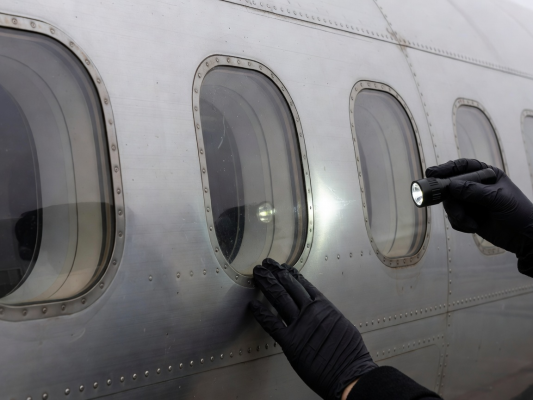
Aviation acrylic windows are highly susceptible to scratching. They require dedicated cleaning materials—typically lint-free wipes and specialized non-abrasive fluids—distinct from those used on the main fuselage. Proper door cleaning must also ensure that seals remain uncompromised and that mechanisms are kept free of cleaning residue.
Practical Note: Surface-Sensitive Cleaning
Care must be taken around sensitive areas like static ports, pitot tubes, and angle-of-attack sensors. Cleaning personnel must be aware of these zones to prevent inadvertent blockage or damage, coordinating closely with maintenance guidelines.
Environmental Considerations & Runoff
European airports strictly regulate environmental runoff. Traditional wet washing is often restricted to specialized wash bays with dedicated drainage and filtration systems. When wash bays are unavailable or impractical, dry washing or semi-dry wiping processes are implemented to ensure zero contaminated runoff reaches the apron drainage network.
Cleaning Frequency & Operational Coordination
The frequency of exterior cleaning varies widely depending on the routes flown, the operational environment (e.g., coastal routes versus inland), and operator policy. Because exterior cleaning requires significant time and physical access to the aircraft, it is typically scheduled during extended ground time or planned maintenance checks.
General Checklist for Exterior Care
- Verify aircraft access and secure required permits for apron or hangar operations.
- Identify and protect critical sensors and ports according to operator guidelines.
- Select cleaning method (dry wash vs. wet wash) based on airport environmental rules.
- Use dedicated, non-abrasive materials for acrylic windows.
- Inspect and wipe down service areas (cargo doors, landing gear doors) for excessive grime.
- Perform final visual inspection of livery and surfaces for uniform cleanliness.
Disclaimer: Always ensure that all cleaning materials and methods are compatible with the specific aircraft materials and explicitly approved by the aircraft manufacturer or operator. We do not provide chemical mixing instructions or specific product recommendations.